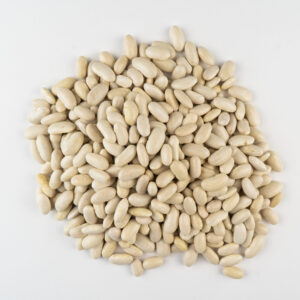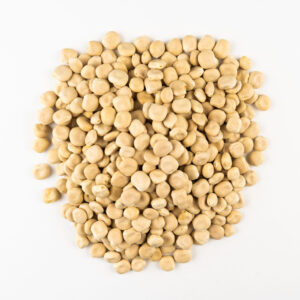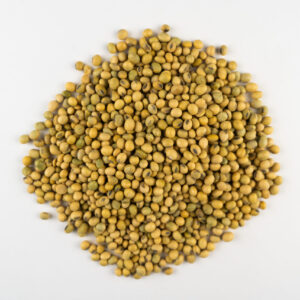

- Product Name: Lentils
- Family: Fabaceae
- Botanical Name: Lens culinaris
- Common Names: Lentils | Red Lentils | Brown Lentils | Split Lentils
- Cultivation: Conventional only; available without pesticide residue analysis.
- Types & colors: Red split | Brown whole | Egyptian Lentils
- HS Code: 0713.40
- MOQ: 1 × 20′ FCL, 24 MT
- Origin: Egypt.
- Crop: April – May
Bulk Lentils – bulk red lentils, bulk brown lentils for B2B Importers
Introduction
Source your next container of bulk lentils — available as Red Split or Brown processed and graded to meet your exact specifications for food manufacturing, retail repacking, or food service supply.
Lentils are a graded commodity, and the grade is almost entirely a processing outcome. Two containers of the same crop can arrive as very different products depending on how they were dehulled, split, polished, and sorted.
What a buyer is judging is narrow and specific: split integrity, colour uniformity, foreign matter, and how the lot cooks. Broken and powdery splits turn to mush and cost a soup or dal manufacturer their texture spec. Off-colour seed in a red lentil lot is visible in the finished pack.
We process and grade to buyer specification, with optical colour sorting, and prepare containers with full export documentation.
Request a Quote | Ask for a Sample | Discuss Your Specifications
Available Colors/varieties
Choose the type that best matches your processing requirements:
Red Split Lentils — dehulled and split, the highest-volume traded lentil. Cooks quickly and breaks down into a purée, which is why it is the base for dal, soups, and purées across South Asia and the Middle East. Sold to specification on split percentage and broken content.
Brown Lentils — with the seed coat intact. Firmer, holds shape well, used in salads, stews, ready meals and canning. Slower-cooking than red. Bulk brown lentils are supplied to size grade on request.
EIC Quality & Certifications
We stand behind the quality of our lentils because we build long-term supply partnerships.
For independent verification, we accept third-party inspection by SGS or another inspection company of your choice, at the buyer’s expense. We welcome it on any container.
Our certificates and registrations include:
- NFSA registered with the Egyptian Food Safety Authority
- ISO 9001 & ISO 22000 certified for quality and food safety management
- FDA, DUNS, GACC (China), and MFDS (Korea) registered
View our certificates and registrations for support with import compliance.
Processing controls: pre-cleaning to remove dust, stones, straw and gross foreign matter; destoning and gravity separation, since stones are the most common rejection cause in pulses; dehulling and splitting, the step that determines split integrity and broken percentage; polishing for the uniform surface finish buyers expect in red lentils; optical colour sorting to eject off-colour and defective seed; size grading to your specified range; and metal detection before packing (if required)
Beyond certificates, we rely on our family experience and reputation. Our roots in the herb trade go back to 1960, beginning with our grandfather. We protect that reputation with every shipment and seek lasting relationships with importers.
Shipping, Export Coordination & Documentation
Shipping & Logistics:
- FOB, CFR, and CIF Incoterms, with loading from Port Said, Alexandria, Damietta, and Sokhna ports
- Cost-effective shipping arrangements through our freight partners
Export Documentation:
- Commercial Invoice
- Packing List
- Certificate of Origin (COO)
- Official Phytosanitary Certificate
- Bill of Lading (BL)
- Fumigation Certificate when required
- War Risk Insurance for 40′ containers, covered by EIC
Silica gel is placed inside the container to help control humidity and protect the quality of the bulk lentils during transit.
Packaging, Shelf Life & Storage
Packing Configurations:
- 25 kg / 50 kg Polypropylene (PP) bags for standard bulk packing
- 1000 kg jumbo big bags for industrial buyers — confirm availability
- Customized B2B packing and private labelling available on request
Shelf Life: Up to 24 months when stored under recommended conditions.
Storage Conditions: Store in a cool, dry environment, away from humidity and pests. Pulses are more vulnerable to insect activity than milled products, so fumigation and sealed storage matter.
Supply Capacity & What Affects Lentils Price
Supply Capacity:
- MOQ: 1 × 20′ FCL. Lentils are dense, so containers reach weight capacity — approximately 24 MT. Confirm.
- Regular monthly shipping availability
- Contract-based programs for continuous annual-volume supply
What Affects Lentils Price:
- Type — red split and brown are two different products at two different prices
- Size grade — lentils trade on size as well as type; make sure competing quotes are the same grade
- Split percentage and broken content — tighter tolerances cost more to produce and matter directly to texture in the finished dish
- Foreign matter and colour uniformity — optical sorting to a tight specification means more rejects and more cost
- Packaging configuration — jumbo bags price differently from 25 kg sacks
- Order volume and contract term
- Global crop conditions — the pulse market moves with Canadian, Australian and Turkish harvests
- Timing of the order relative to the harvest season
Because lentil prices vary according to these factors, we quote each shipment individually rather than publish a fixed rate. Send us your specifications and destination port for an accurate quotation within 24 hours. Check our Egyptian Herbs, Spices, Seeds & Legumes
Harvest Calendar to understand seasonal timing
Who This Product Is For
Our lentils supply is intended for B2B clients purchasing by full container load (FCL) for manufacturing, processing, and commercial use.
- Red Split Lentils → Dal, soup, and purée manufacturers; ready-meal producers
- Brown Lentils → Canning operations, salad and stew manufacturers, ready-meal processors
- All types → Pulse repackers and private-label brands; food service and catering suppliers; plant protein and flour processors; food aid and institutional tender supply
We supply FCL quantities to commercial buyers and do not serve retail or direct-to-consumer orders.
Request a Quote or Sample
- Share your lentil specifications, including type, size grade, split percentage, broken and foreign matter tolerances, and packing format.
- Confirm your order volume and destination port (POD).
- Receive a customized quotation and estimated lead time.
- Review and approve the sample before shipment — through a factory visit, a video showing the actual lentil sample, a physical sample sent to you, or independent SGS inspection.
- Proceed with your first container once the specifications and sample are approved.
Request a Quote
Ask for a Sample
Discuss Your Import Specifications
info@herbseic.com | www.herbseic.com | WhatsApp Us Now| Based in Fayoum, Egypt.
Fast response within 24 hours
FAQs
Q1. Who are we?
We are a third-generation family business established in 2007, with family roots in the herb trade going back to 1960. We process our products in two facilities: manual processing for delicate products and mechanized sorting and processing.
Q2. How do red and brown lentils differ?
Red lentils are dehulled, so they cook fast and break down. Brown lentils keep their seed coat, cook slower, and hold shape — better for salads, stews, and canning. They are not substitutes for one another in a recipe.
Q3. What should I specify when ordering?
Type, size grade in mm, split percentage, broken and foreign matter tolerances, volume, and packing format. If that is more detail than you have to hand, send us a sample of what you currently buy, and we will match it.
Q4. Do you colour sort?
Yes. Optical sorting removes off-colour and defective seed, which matters most in red lentils where discolouration is visible in the finished pack.
Q5. Can I arrange independent inspection?
Yes, and we encourage it. SGS or an equivalent third party can inspect any container before shipment. You can also verify through
a factory visit or video verification, and follow your shipment through our export process.
Q6. What is the shelf life?
24 months when stored cool and dry. Pulses are more vulnerable to insect activity than milled products, so fumigation and sealed storage matter more than the calendar date.
Q7. Do you seek long-term relationships with buyers?
Yes. We serve customers across 21 countries spanning the Americas, Africa, Europe, Asia, the Gulf region, and Australia. We want every first shipment, and every shipment that follows, to strengthen trust and build a lasting partnership.
Q8. How can I verify and follow my order before shipment?
You can verify your order through a factory visit, video verification, or third-party inspection such as SGS at the buyer’s expense. You can also follow your shipment through our export process. Explore Our Process
Q9. Do you supply the local market?
No. We supply export markets only.