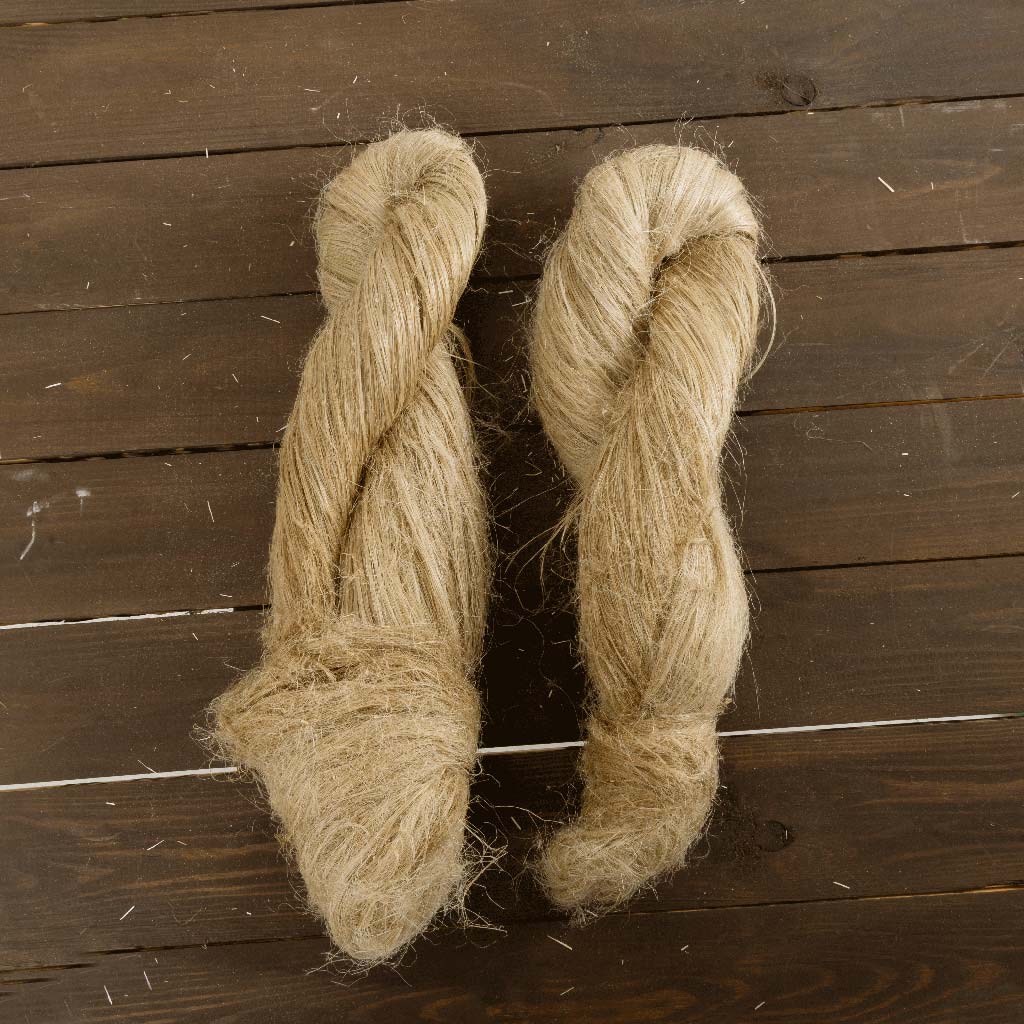
- Product Name: Egyptian Scutched Flax Fibre (Long Line Fibre / Short)
- Botanical Name: Linum usitatissimum
- Family: Linaceae
- Product Type: long line fibre / short
- Common Names: Scutched Flax | Long Line Flax Fibre | Line Flax | Egyptian Flax Fibre | Natural Linen Fibre
- Processing: Water-retted, then scutched to separate long line fibre from tow
- Quality / Grade: Fully scutched, clean, long staple length, high tensile strength. Available in two grades: Grade 1: 90–100 cm | Grade 2: 80–90 cm. Available in Light Blonde / Golden Natural tones.
- HS Code: 5301.21 scutched
- MOQ: 1 × 40′ FCL for baled fibre (25-27 MT)
- Packing: Approximately 250 kg per bale.
- Origin: Egypt
- Crop: June
Contact Us Today to talk about the flax fiber business.
Egyptian Scutched Flax Fiber
Introduction
Source your next container of Egyptian scutched flax fibre — long line fibre prepared for spinning mills, linen yarn producers and high-value textile manufacturers.
Egypt has grown fibre flax for millennia, and Egyptian linen is one of the oldest continuously traded textiles in the world. Long line fibre is the high-value output of that chain — the long, aligned fibre separated from the shorter tow during scutching, and the material fine linen yarn is spun from.
Two things determine what a lot is worth: retting quality and fineness.
Retting is the controlled decomposition that loosens fibre from the woody stem, and it is where most flax lots are won or lost. Under-retted fibre resists separation and carries excess shive; over-retted fibre is weakened and breaks in processing. Neither is recoverable downstream, which is why an experienced buyer asks about retting before anything else.
Request a Quote | Ask for a Sample | Discuss Your Specifications
Looking for Flax two instead? See our flax tow — re-scutched (arrous)
Available Grades & Specifications
Scutched Long Line Fibre — water-retted and scutched, separated from tow, graded by fineness and length (grade A: 90-100cm)
Scutched Short Line Fibre — water-retted and scutched, separated from tow, graded by fineness and length (grade B: 80-90cm)
Quality & Verification
We stand behind the quality of our scutched flax fibre because we build long-term supply partnerships.
For independent verification, we accept third-party inspection by SGS or another inspection company of your choice, at the buyer’s expense. Physical samples are available for your own testing before you commit.
Processing: cultivation in established Egyptian fibre flax growing areas; controlled retting — the step that determines fibre separation and strength; scutching to separate long line fibre from tow; grading by fineness, length and colour; and baling to your specified format.
Our roots in Egyptian agriculture go back to 1960, now in the third generation. We deal directly as producers and exporters rather than through intermediaries, and remain accountable for quality through transit and arrival.
Shipping, Export Coordination & Documentation
Shipping & Logistics:
- FOB, CFR, and CIF Incoterms, with loading from Port Said, Alexandria, Damietta, and Sokhna ports
- Baled and containerised for ocean transit
- Cost-effective shipping arrangements through our freight partners
Export Documentation:
- Commercial Invoice & Packing List
- Certificate of Origin (COO)
- Bill of Lading (BL)
- Phytosanitary Certificate where required for plant fibre
- War Risk Insurance policy for 40′ containers, covered by EIC
Packaging & Handling
Packing Configurations:
- Compressed bales — almost 250kg+-
- Wrapped and strapped for container loading
- Customised baling available on request
Supply Capacity & What Affects Flax Fibre Price
Supply Capacity:
- MOQ: 25-27 MT approximately – 1 × 40′ FCL for baled fibre weight 250kg almost
- Contract-based programmes for continuous supply
What Affects Flax Fibre Price:
- Retting quality. Under- or over-retted fibre performs poorly regardless of subsequent processing, and the difference is not recoverable. Experienced buyers ask about it first.
- Fibre length and uniformity. Longer, more uniform fibre yields better in spinning.
- Colour grade. Affects both value and what the fibre can be dyed or bleached to.
- Shive content and cleanliness. We offer a distinctive AA grade that sets us apart from other exporters. It is manually sorted after processing by trained workers, removing lower grades and shorter fibres, resulting in a premium Grade 1 fibre with high tensile strength and a length of 90–100 cm.
- Order volume, baling format and contract term
Because flax fibre price varies according to these factors, we quote each shipment individually rather than publish a fixed rate. Send us your specifications and destination port for an accurate quotation within 24 hours.
Who This Product Is For
Our long-line flax fibre is prepared for industrial textile processing:
- Linen spinning mills → wet-spun fine and medium yarn counts for apparel and home textiles
- Linen yarn producers → the primary raw material for woven and knitted linen
- Home textile and apparel manufacturers → sourcing fibre for contracted spinning
- Technical textile producers → applications requiring long, strong natural bast fibre
- Blended yarn producers → linen-cotton and linen-wool blends
If your application requires flax tow rather than long line fibre, please see our [Egyptian Flax Tow page] instead.
We supply container quantities (FCL) to industrial buyers and do not serve retail or craft-scale orders.
Request a Quote or Sample
- Share your flax fibre specifications — length and grade.
- Confirm your order volume and destination port (POD).
- Receive a customized quotation and estimated lead time.
- Review and approve a representative physical fibre sample before shipment. The buyer can also verify quality through a personal inspection before baling, or through an independent third-party inspection company before baling and during container loading, with the importer bearing the inspection cost.
- Proceed with your first container once the specifications and sample are approved.
Request a Quote Ask for a Sample Discuss Your Technical Specifications
info@herbseic.com | www.herbseic.com | WhatsApp Us Now | Based in Fayoum, Egypt
Fast response within 24 hours
FAQs
Q1. Who are we?
We are a third-generation family business established in 2007, with roots in Egyptian agriculture going back to 1960. In herbs and seeds, we work directly as producers and exporters. In Egyptian flax, we have been traders and exporters for over 7 years, supplying markets including Turkey, China, and India. Our strength is selecting and supplying the quality grade required by each buyer, including our premium AA grade, as well as standard and lower grades for different applications and price requirements.
Q2. What happens during flax scutching?
The flax processing and grading process separates the fibre into long and short flax, while the remaining material is classified as Flax tow, which is further processed by a Scharll machine into four grades.
Q3. What is the difference between long line fibre and short fibre?
The Long line has high tensile strength and is classified as A or AA when it undergoes an additional manual sorting process after mechanical processing to further improve its quality. Its fibre length is 90–100 cm.
The second grade is obtained after the first-grade sorting process and has a fibre length of 80–90 cm.
Q4. What is the MOQ?
The MOQ is one 40′ FCL, approximately 25-27 metric tons.
Q5. Can I have the fibre tested independently?
Yes. SGS or any inspection company of your choice can verify the fibre’s quality and quantity at your cost. We can also arrange a buyer’s visit to inspect the grade, colour, and tensile strength before baling, witness the empty and loaded container weights at the weighbridge, attend the loading, and personally seal the container. Alternatively, we can provide a representative sample matching the shipment for approval and testing in the buyer’s country. Learn more about our Process
Q6. Do you seek long-term relationships with buyers?
Yes. We work as long-term supply partners rather than transactional exporters, and remain accountable for quality through transit and arrival.
