
- Product Name: Dried Sage Leaves
- Family: Lamiaceae
- Botanical Name: Salvia officinalis
- Common Names: Sage | Dried Sage | Common Sage | Maramia
- Cultivation: Conventional; supplied without additional laboratory testing.
- Plant Part: Leaf
- HS Code: 1211.90
- MOQ: 1 × 20′ FCL — 4.50 MT
- Origin: Egypt
- Crop: April – Aug.
Proven Egyptian Sage in bulk Exporter for Salvia Officinalis Importers
Introduction
Source your next container of dried sage leaves directly from Egypt — available as Leaf, Rubbed, TBC, or Powder, processed to meet your exact specifications for spice blending, meat processing, tea blending, or essential oil distillation.
Sage is bought on two things: leaf-to-stem ratio and color. Sage stem is woody and carries little aroma, so a cut with high stem content contains less herb per kilo — which is where quotes diverge most, and where buyers most often compare offers that are not like for like.
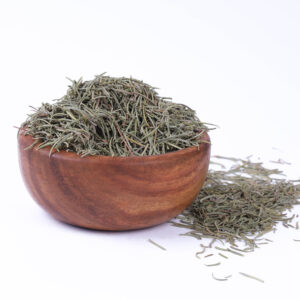
Colour is the fastest read on drying quality. Sage should hold a soft grey-green; leaves that have browned or gone dull have usually been dried too hot, and the volatile oil went with the colour.
Request a Quote | Ask for a Sample | Discuss Your Specifications
Available Forms
Choose the grade that best matches your processing requirements:
Leaf — intact dried sage, primarily free from stems, with up to 10% stem tolerance. Suitable for premium retail packing and visible-botanical applications. Packed in cartons to minimize crushing into fines.
Rubbed Sage — coarsely broken dried sage containing both leaves and stems, with a light, fluffy texture. The standard format for sausage and meat seasoning, where it disperses evenly without the density of ground material.
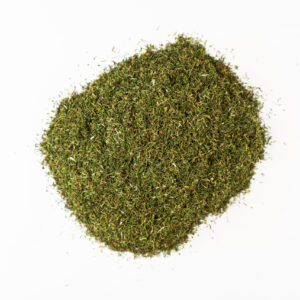
Sage TBC (Tea Bag Cut) — sized for automated tea bag filling. Sage — maramia — is a widely consumed herbal infusion across Egypt and the Levant.
Sage Powder — finely ground sage suitable for sauces, soups, seasoning blends, and coating applications.
Quality & Certifications
We stand behind the quality of our dried sage because we build long-term supply partnerships.
For independent verification, we accept third-party inspection by SGS or another inspection company of your choice, at the buyer’s expense.
Our certificates and registrations include:
- NFSA registered with the Egyptian Food Safety Authority
- ISO 9001 & ISO 22000 certified for quality and food safety management
- FDA, DUNS, GACC (China), and MFDS (Korea) registered
Review our full ISO and FDA certifications to streamline your import clearance.
Processing Controls: We source sage from experienced farms, then carry out cleaning, sorting, and grading in-house through skilled manual workers to remove foreign matter and achieve the required quality and specifications before packing and export.
Beyond certificates, we rely on our family experience and reputation. Our roots in the herb trade go back to 1960, beginning with our grandfather. We protect that reputation with every shipment and seek lasting relationships with importers.
Shipping, Export Coordination & Documentation
Shipping & Logistics:
- FOB, CFR, and CIF Incoterms, with loading from Port Said, Alexandria, Damietta, and Sokhna ports
- Cost-effective shipping arrangements through our freight partners
Export Documentation:
- Commercial Invoice
- Packing List
- Certificate of Origin (COO)
- Official Phytosanitary Certificate
- Bill of Lading (BL)
- Fumigation Certificate when required
- War Risk Insurance for 40′ containers, covered by EIC
Silica gel is placed inside the container to help control humidity and protect the quality of the dried sage during transit.
Packaging, Shelf Life & Storage
Packing Configurations:
- Cartons — recommended for leaf, to prevent compression into fines
- 20 kg Polypropylene (PP) or kraft paper bags — for rubbed sage, TBC and powder
- Customized B2B packing available on request
Shelf Life: Up to 24 months when stored under recommended conditions. Sage powder is best used within 12 months.
Storage Conditions: Store dried Sage in a cool, dry environment below 20°C, protected from direct sunlight and humidity. Light fades colour fastest, so packaging integrity matters more than the calendar date.
Supply Capacity & What Affects Sage Price
Supply Capacity:
- MOQ: 1 × 20′ FCL. Dried leaf is very low density, so a container fills by volume well before weight — expect modest tonnage per FCL. 4.50 MT.
- Regular monthly shipping availability
- Contract-based programs for continuous annual-volume supply
- Consolidation available — sage can ship alongside marjoram, basil, chamomile, and other leaf herbs in one container
What Affects Sage Price:
- Leaf-to-stem ratio. The dominant factor. Destemmed leaf carries a substantial premium over cut material with stem, and comparing the two makes the second look cheap when it simply contains less herb.
- Product form — leaf Sage, rubbed, TBC, or powder. Rubbed sage requires additional processing.
- Timing of the Order: Relative to the dried Sage crop: Ordering Lupin during the harvest period can offer more competitive pricing. Learn about the Harvest Calendar
- Order volume, packaging configuration.
Because sage price varies according to these factors, we quote each shipment individually rather than publish a fixed rate. For better planning, check our Egyptian Herbs, Spices, Seeds & Legumes Harvest Calendar to understand seasonal timing. Send us your grade requirement and volume for an accurate quotation within 24 hours.
If you are comparing offers, tell us the form content you have been quoted — that is usually where the difference lies.
Who This Product Is For
Our sage supply is intended for B2B clients purchasing by full container load (FCL) for manufacturing, processing, and commercial use.
- Leaf → Premium retail and private-label packers; visible-botanical applications
- Rubbed Sage → Sausage and meat processors — sage is a defining herb in breakfast sausage, poultry seasoning, and charcuterie formulations
- Sage TBC → Herbal tea blenders producing maramia infusion for Middle Eastern markets; tea bag manufacturers
- Sage Powder → Soup, sauce and ready-meal manufacturers; coating systems
- All forms → Essential oil distillers producing sage oil for flavour, fragrance and cosmetic use
We supply Dried Sage FCL quantities to commercial buyers and do not serve retail or direct-to-consumer orders.
Request a Quote or Sample
- Share your dried sage specifications, including grade, cut size, and application.
- Confirm your order volume and destination port (POD).
- Receive a customized quotation and estimated lead time.
- Review and approve the sample before shipment — through a factory visit, a video showing the actual sage sample, or a physical sample sent to you so you can check leaf content and colour against your standard.
- Proceed with your first container once the specifications and sample are approved.
Request a Quote Ask for a Sample Discuss Your Import Specifications
info@herbseic.com | www.herbseic.com | WhatsApp Us Now| Based in Fayoum, Egypt.
Fast response within 24 hours
FAQs
Q1. Who are we? We are a third-generation family business established in 2007, with family roots in the herb trade going back to 1960. We process our products in two facilities: manual processing for delicate products and mechanized sorting and processing.
Q2. Which grade should I order? Destemmed leaf where aroma per kilo matters or the herb is visible in the pack. Rubbed for sausage and meat seasoning. Cut for spice blends. TBC for tea bag lines. Powder for sauces and coating systems. Tell us the application, and we will recommend.
Q3. Why do sage quotes vary so much? Usually leaf-to-stem ratio. Sage stem is woody and near-aromaless, so a cut grade with high stem content contains less actual herb per kilo than destemmed leaf. Always compare quotes on leaf content, not headline price.
Q4. What is maramia? The Arabic name for sage, and a widely consumed herbal infusion across Egypt and the Levant. We supply TBC grade sized for tea bag filling lines.
Q5. Which sage species do you supply? Salvia officinalis — common or garden sage, the standard culinary and food-manufacturing species. Greek sage (Salvia fruticosa) is a different species with a different compound profile. If your specification names a particular species, confirm it with us at the enquiry stage.
Q6. Why is the tonnage per container so low? Dried leaf sage has very low bulk density — a 20′ container reaches its volume limit long before its weight limit. That is normal for leaf products, and packing format has a real effect on landed cost per kilo.
Q7. Do you seek long-term relationships with buyers? Yes. We serve customers across 21 countries spanning the Americas, Africa, Europe, Asia, the Gulf region, and Australia. We want every first shipment, and every shipment that follows, to strengthen trust and build a lasting partnership.
Q8. Do you work with brokers or commission-based agents? No. We do not work with brokers or commission-based intermediaries. We deal directly with the consignee and the actual buyer.
Q9. How can I verify and follow my Sage order before shipment? You can verify your order through a factory visit, video verification, or a third-party inspection (such as SGS) at the buyer’s expense. You can also follow your shipment through our export process. Explore Our Process
Q10. Do you supply the local market? No. We supply export markets only.